Can Post Postpartum Depression Start 4 Montys After Baby
Pregnancy can be ane of the happiest times in a woman'due south life. However, at that place are several changes that occur during the postpartum menstruation. Postpartum depression is one problem that some women have to deal with.
Postpartum depression (PPD) is a blazon of mood disorder that can occur in women later childbirth.[30] A combination of biological, physical, and emotional factors may lead to this trouble.[xxx][16]
The levels of estrogen and progesterone in the body fluctuate dramatically after delivery. These hormones are linked with neurotransmitters that affect a person's mood. These chemic changes can contribute to PPD.[nine][30]
An estimated xiii%-15% of women develop PPD in the first year afterwards childbirth. This hazard is substantially college, up to 41%, in women who have a history of depression or other mood disorders before pregnancy.[nine][30]

What are the Causes of and Risk Factors for Postpartum Depression
PPD is largely brought on by certain hormonal changes that take place in women following childbirth. Still, there are some women who are more probable to feel PPD than others, due to the following hazard factors:
- If they take a personal history of depression, bipolar disorder, or other mental wellness conditions of the similar
- If mental health bug such as depression or bipolar syndrome run in their family
- If they lack a strong support network amid family and friends
- If they experienced depressive episodes during pregnancy
- If they have previously struggled with a problematic pregnancy or childbirth in the past
- If they are in a financial crunch and have money constraints
- If they are going through an emotionally stressful phase, which tin be due to personal equally well as professional upheavals
- If they are below 20 years of age
- If they are grappling with alcoholism or illegal drug abuse
- If their pregnancy was unplanned or unwanted
- If they are raising a baby with special needs
- If they take a enervating baby that is difficult to care for
- If they have problems in breastfeeding their child
While the above-listed factors can make one increasingly susceptible to developing PPD, the status is non limited to loftier-adventure women alone. This form of postnatal low can affect any new mother, including those who take had a normal delivery and have given nascency to a salubrious child.
As a personal history of depression can increase the hazard of PPD, let your md know if you accept struggled with depression or anxiety in the by. Past taking special precautions, you may be able to reduce your risk of developing PPD.
What are the Symptoms of Postpartum Low?
Major symptoms of PPD include:
- Feelings of being overwhelmed
- Intense anxiety
- Frequent crying or weeping
- Irritability or anger
- Sadness
- Fatigue
- Feelings of worthlessness
- Changes in sleeping or eating habits
- Lack of concentration
- Intense worry about the baby or lack of interest in the newborn
PPD can also crusade physical symptoms such as:
- Headaches
- Chest pain
- Hyperventilation
The infant tin exist affected by the mother's development of PPD; therefore, it is crucial to recognize the signs and symptoms of PPD.[sixteen][30] It is as well important to seek treatment immediately if those signs or symptoms are present.
How is Postpartum Low Treated?
Bringing a new life into the world is a painful yet life-changing feel, something that about women look forwards to. However, this new and exciting chapter in a adult female's life tin often be overshadowed by a thick, gloomy cloud of postnatal low.
When yous take on the role of a mother, the responsibilities that come with it can be quite daunting and overwhelming, peculiarly in the initial phase. PPD can further cripple new mothers past making them feel lonely, distressed, and anxious.
It is the duty of friends and family to rally around the patient and help her through the bad times. Every bit far as treatment is concerned, the following strategies accept proven to exist quite constructive:
Self-Care Measures – You need to aid yourself before anyone else can help you. To that terminate, y'all tin can try opening up to your family and friends about your feelings and what kind of help you demand from them. Give yourself fourth dimension to unwind by doing things that make you happy.
A healthy nutrition along with regular exercise is essential to keep you lot in the best of spirits. Endeavor to pack in as much slumber at dark as possible, and keep recharging your batteries by taking remainder breaks throughout the solar day. Ask your partner, friends, or family to help out with the babe as much as possible. Information technology is imperative that you don't inundate yourself with mother duty.
Psychological Therapy – Ask your doctor to recommend a self-assist course or a course of therapy such as cognitive behavioral therapy (CBT), which can aid you overcome the postpartum blues.
Medication for Astringent Cases – If all other methods neglect to improve your condition, the terminal resort is taking a doctor-prescribed antidepressant that is safety to swallow while nursing.
How Do You Bargain with Postpartum Low?
Here are ten means to fight and preclude PPD.
1. Up Your Vitamin D Intake
Vitamin D is an essential nutrient that is of import for mental wellness.
This vitamin aids in the production of serotonin, the brain hormone associated with mood elevation and happiness. An acceptable level of serotonin helps prevent and treat PPD.

During pregnancy, with the demands placed on the body by the fetus, there is an increased risk for vitamin D deficiency.
Numerous studies in the concluding 5 years support that depression vitamin D during pregnancy is a risk factor for developing PPD.[1][2][3]
However, there was one report done in 2013 in which the findings did not back up a link between low vitamin D during pregnancy and PPD. Instead, this study revealed the contrary, that there was an increased risk for PPD among women with the highest vitamin D levels.[4]
Vitamin D is acquired from exposure to sunlight, diet, and vitamin D supplements. Foods that contain vitamin D include some kinds of fish, egg yolks, and fortified dairy and grain products.
As there are relatively few dietary sources of vitamin D, most of the trunk'south vitamin D comes from direct exposure to sunlight. Vitamin D supplements are another common source of vitamin D.[5]
2. Eat Foods Rich in Omega-3 Fatty Acids
Omega-3 fatty acids are vital nutrients for a number of prison cell functions.
These fatty acids are central components in cell membranes, which aid the proper operation of serotonin. Serotonin is important for carrying messages to the brain cells to maintain a positive mood.

Omega-3 fatty acids too play a key role in the development and performance of the central nervous system, and they have been proven constructive in the handling of perinatal depression, which includes depression both during and afterwards pregnancy.[half-dozen][7]
A review of literature in 2018 revealed strong evidence to support that dietary supplementation with omega-3 fatty acids during or following pregnancy can reduce the symptoms associated with depression. Furthermore, there is testify that supplementation in healthy pregnant women reduces the chance of PPD.[8]
To ensure an adequate intake of omega-3 fat acids, eat more flaxseeds, fat fish such as salmon, walnuts, and omega-3-fortified eggs. You tin can also take an omega-iii fatty acid supplement, after consulting your doctor.
3. Breastfeed Your Babe
New moms diagnosed with PPD demand a secure emotional attachment with their newborns. The infants likewise need this secure attachment with their mothers. This nonverbal emotional bond aids in releasing endorphins that brand mothers feel happy and confident as a mom.
To build this strong emotional bail, breastfeeding is the best option. However, mothers with PPD may be less likely to breastfeed.

This is supported past a 2012 written report that revealed that there seems to be a reciprocal relationship betwixt PPD and breastfeeding; women who breastfeed are less likely to develop PPD, while women with PPD are less probable to keep breastfeeding.[10]
So, it becomes important for the partner or other family members to help new moms empathize the importance of breastfeeding.
A study in 2018 showed statistically pregnant prove that women who breastfeed their infant are less likely to develop PPD. Further, this study suggested that fifty-fifty women who intended and planned to breastfeed just ultimately did not may exist at a lower hazard for PPD.[9]
4. Consider Talk Therapy
In talk therapy, a mental health professional (a counselor, therapist, psychologist, psychiatrist, or social worker) talks with the woman suffering from PPD on a one-to-one basis.
This allows the new mom to share all her fears and emotions in conviction with someone outside her circle of family and friends. Through the therapy, the new mother becomes ready to accept the new responsibility of motherhood in a much meliorate fashion.
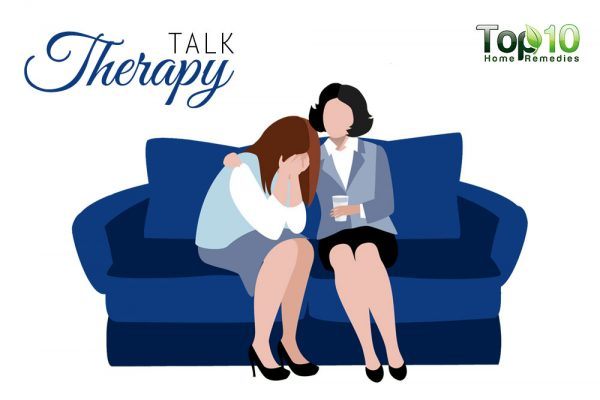
Two types of counseling are found to be very constructive in treating PPD. These are cognitive behavioral therapy (CBT) and interpersonal therapy (IPT).
CBT helps people recognize and change negative thoughts and behaviors. This talk therapy is based on the premise that both perceptions and behaviors are intimately linked to mood. Evidence suggests that antenatal CBT is an effective method for the prevention and treatment of PPD.[12]
IPT helps people empathise and work through problematic personal relationships. This time-limited therapy focuses mainly on addressing the person'due south interpersonal connections.
A 2007 report suggested that IPT can be beneficial in treating PPD because it helps address interpersonal stressors that occur during the postpartum period.[11]
In both these therapies, treatment usually lasts 3 to 4 months.
5. Salvage Your Stress with a Massage
A soothing, warm massage is one of the best ways to pamper a depressed trunk.
Massage non only rejuvenates a depressed torso but too fills it with renewed energy, which is important as, being a female parent, yous take a new responsibleness of taking care of your newborn baby.

It fifty-fifty helps go rid of all the negative feelings and thoughts, as well as plays a key part in managing physical pain and the impacts of stress.
Postpartum massage has other benefits as well, including hormone regulation, reduced swelling, ameliorate sleep, and improved breastfeeding.
Forth with that, doing a babe massage under the supervision of your partner or an proficient tin can besides aid fight PPD. Massaging the baby helps depressed mothers bond with their newborns.
In that location is show to propose that massage during pregnancy benefits non only the mother, including reduced incidence of low and lower cortisol levels during the postpartum catamenia, only benefits the babe as well.
A study found that infants born to mothers who had massage therapy during pregnancy were less likely to be born prematurely and had a lower incidence of low birthweight. Those infants also had lower cortisol levels, like their mothers, and they performed amend on orientation and motor scales.[13]
A study published in the Journal of Affective Disorders indicates that attending baby massage classes improved maternal low and mother-babe interactions during the offset twelvemonth.
It is important to find a massage therapist who is certified in post-delivery massage therapy.
half-dozen. Try Acupuncture Therapy
Another significant way to deal with depression post-commitment is age-old acupuncture therapy. In this therapy, thin needles are inserted at specific vital pressure points in the body.
Information technology helps maintain the equilibrium of the various hormones in the body. Acupuncture is besides beneficial during pregnancy.[fourteen][15]

Acupuncture is an effective handling that can help to reduce depression symptoms during pregnancy. It can fifty-fifty give the mother a boost of free energy to replenish the free energy depleted during childbirth.[14]
When it comes to acupressure, information technology is important to get it done by an expert only.
7. Go for Bright Light Therapy
The use of vivid low-cal therapy as a treatment for low has get pop in contempo times.
Bright light therapy has fewer side effects and is less expensive than antidepressant medications. The antidepressant effects of vivid light therapy are well established, and it is a relatively safe treatment for depressive disorders.[16][17]
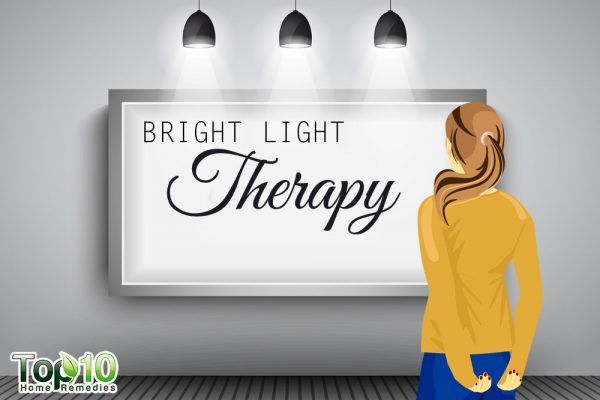
In this therapy, the patient's eyes are exposed to intense but prophylactic amounts of low-cal for a specific and regular length of time. The light corrects a problem with the inner biological clock, chosen the circadian rhythm.
Also, it affects neurotransmitters in the brain, including serotonin, noradrenalin, and dopamine, which are important in treating depression. Studies have shown that brilliant low-cal therapy can ameliorate the regulation of the serotonergic system in women with perinatal depression.[17]
Two cases highlighted in a alphabetic character to the editor of the American Journal of Psychiatry in 2000 showed a adept clinical response to bright light therapy forth with subjective reports of improvement in mood. The therapy was well tolerated in both cases with no adverse effects during the handling class.[16]
8. Practice Mindfulness Meditation
Mindfulness is defined as "the basic man ability to be fully nowadays, enlightened of where we are and what we're doing, and not overly reactive or overwhelmed by what'southward going on effectually united states of america".[22]
It is a concept of Buddhist philosophy and is practiced to achieve enduring happiness and gain the appreciation of the true nature of beingness.[18]
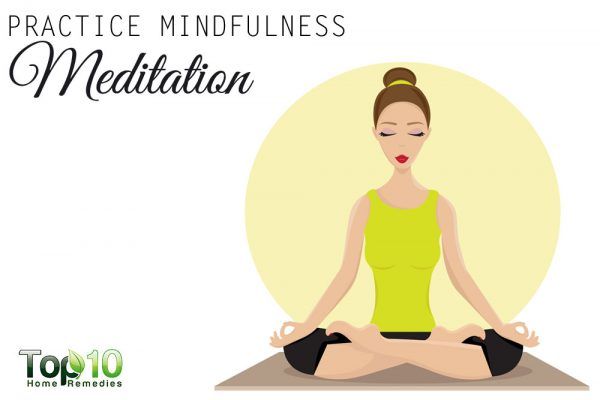
The practice of mindfulness meditation has been proven to effectively reduce stress, anxiety, and negative mood during pregnancy, thus lowering the risk of developing PPD.[19][twenty]
Mindfulness training has also been shown to be constructive during childbirth and is used by some women equally an alternative to systemic opioid hurting medication.[21]
In fact, mindfulness meditation tin can make you lot feel calm and energized. These factors are needed for the new role of parenthood.
The practice of mindfulness-based childbirth and parenting (MBCP) results in a lower incidence of anxiety, low, and negative impact during pregnancy, childbirth, and the early parenting menses.[23]
Initially, brand it a daily habit of spending at least 5 minutes intentionally practicing deep relaxation. Then, gradually increase the time.
9. Take Proper Sleep and Rest
Altered sleep patterns and sleep disturbance are mutual during the postpartum catamenia. These are related to newborn sleep and feeding patterns.
The Wisconsin Maternity Get out and Wellness Project indicated that slumber is highly essential for a new mom. A total 8 hours may seem impossible when you're dealing with a newborn, but poor slumber makes depression worse.

Poor slumber leads to significant alterations in brain neurotransmitter performance, which is one of the reasons behind depression.
A report washed in 2001 revealed that difficulty falling asleep in the kickoff calendar month postpartum was ane of the four predictors of depression at iv months postpartum. The other predictors included maternal historic period, low during pregnancy, and thoughts of decease and dying at i month postpartum.[24]
During pregnancy and the postpartum period, it is important to grab up on lost sleep with naps. If possible, a new mother should accept the baby out for a walk every morning to ameliorate the maternal and child circadian rhythms. Y'all tin also ask your partner to help with the dark work.
10. Appoint in Balmy Exercises
Exercise is just as effective as medication when it comes to treating depression. Hence, after delivery, the sooner you lot get back up and moving, the better. Numerous studies have shown that exercise is associated with decreased symptoms of anxiety and low.[25]
There is no need to indulge in intense conditioning programs. Only a thirty-minute walk each solar day will work wonders. You can as well have your babe forth in a stroller. Stretching yoga exercises are as well helpful in getting y'all back in shape.

A 2007 review of the literature found evidence that supports exercise equally a useful handling for PPD.[26] It is further suggested that taking a walk while pushing the baby in a stroller may be beneficial in the treatment and prevention of PPD.[26][27]
A 2018 study revealed that aquatic exercise tin reduce the risk of developing PPD. It was also suggested that obesity and a sedentary lifestyle during pregnancy are associated with positive screening for PPD.[28]
Some other 2012 study published in BMC Pregnancy and Childbirth too highlights the effectiveness of a half-dozen-calendar month practise programme every bit an effective handling for PPD. Practice should exist considered as role of a comprehensive treatment program for mothers who are at risk for or who have been diagnosed with PPD.[29]
What is Postpartum Psychosis?
In rare instances, PPD can acquire a rather farthermost and possibly unsafe class, which is known every bit postpartum psychosis. This is a serious disorder that is characterized by a sudden onset, unremarkably within a calendar week or two after delivery and sometimes every bit early as the first two days.
A woman suffering from this farthermost degree of psychosis is unable to differentiate betwixt what is real and what's not. Due to this kind of delirium, the patient can easily jeopardize her ain health equally well as that of the infant.
The risk of suicide and infanticide is imminent, and therefore hospitalization is ordinarily required to keep the mother and the baby out of harm'due south way.
A woman with postpartum psychosis normally exhibits the following symptoms:
- Hallucinations, which include seeing things that aren't real or hearing imaginary voices
- Delusions characterized by feelings of paranoia every bit well equally unfounded beliefs that defy logic
- Extreme agitation
- Severe anxiety
- Confusion and disorientation
- Sudden changes in the mood
- Bizarre behavioral antics
- Inability or refusal to eat or sleep
- Thoughts of harming or killing her baby
- Suicidal thoughts or attempts
How Can Postpartum Depression Affect Your Infant?
Existence in the throes of PPD can arrive difficult for a woman to care for herself and her babe as well. A perpetual case of PPD can crusade the post-obit:
- The mother may find it difficult to care for herself and the babe as she may be skipping her routine visits to the doctor.
- The relationship between the mother and her baby may be strained, which may affect the babe's feeding schedules. Breastmilk is the primary source of nutrient for a baby.
- The baby may not be getting the medical attention and intendance required for his/her salubrious evolution such as timely immunization and routine checkups.
- The babe'due south cognitive wellness and developmental milestones may as well exist affected.
Trust your healthcare provider to prove you the fashion through this difficult phase. Early treatment will help safeguard not just your own wellness only your baby's well-being as well.
Additional Tips
- Acquire to bail with your baby. The more emotional connection you have with your baby, the lesser will exist the take a chance of getting depressed.
- Motherhood is not an easy job. Do non hesitate to lean on others for help and support.
- Make your relationships a priority. During difficult times, potent relationships will help you become through the situation.
- Don't keep your feelings to yourself. Share what you're experiencing – the good, the bad, and the ugly – with your partner or anyone else with whom you feel comfortable.
- Make yourself and your baby the priority and practice not worry much nearly household chores.
- To avoid PPD, brand time to take care of yourself. The more you care for your mental and physical well-beingness, the better y'all'll feel.
- Make meals a priority and be certain to follow a well-balanced nutrition.
- Make time for your human relationship with your partner.
- Keep the lines of advice open, especially with your life partner.
- Listen to a variety of music.
- Continue a journal to express your thoughts and feelings by writing them out.
- In severe cases of PPD, antidepressants may be an option. However, medication should exist taken only nether the guidance of a doc.
Resources:
- Murphy PK, Mueller Grand, Hulsey TC, Ebeling MD, Wagner CL. An exploratory written report of postpartum low and vitamin d. Journal of the American Psychiatric Nurses Association. https://world wide web.ncbi.nlm.nih.gov/pubmed/21659271. Published May 2010.
- Mahmood I, Owens CT, Hoover RM. Association Between Vitamin D Levels During Pregnancy and Postpartum Depression. The Journal of pharmacy applied science: jPT: official publication of the Association of Chemist's Technicians. https://www.ncbi.nlm.nih.gov/pmc/articles/PMC5990195/. Published Oct 2015.
- Robinson M, Whitehouse AJO, Newnham JP, et al. Low maternal serum vitamin D during pregnancy and the risk for postpartum depression symptoms. Archives of women's mental wellness. https://www.ncbi.nlm.nih.gov/pubmed/24663685. Published June 2014.
- Nielsen NO, Strøm M, Boyd HA, et al. Vitamin D status during pregnancy and the risk of subsequent postpartum low: a instance-command written report. PloS one. https://world wide web.ncbi.nlm.nih.gov/pubmed/24312237. Published November 27, 2013.
- Holick MF. Vitamin D Deficiency. New England Journal of Medicine. https://www.nejm.org/doi/full/10.1056/NEJMra070553. Published July 19, 2007.
- Dickinson K. Omega-3 Fatty Acids for Treatment of Postpartum Low. Murray State's Digital Commons. https://digitalcommons.murraystate.edu/scholarsweek/Fall2018/ClinicalHealthcare/8/. Published 2018.
- Freeman MP. Omega-3 fatty acids and perinatal depression: a review of the literature and recommendations for futurity research. Prostaglandins, leukotrienes, and essential fatty acids. https://www.ncbi.nlm.nih.gov/pubmed/16930971. Published 2006.
- Hsu M-C, Tung C-Y, Chen H-Due east. Omega-3 polyunsaturated fatty acid supplementation in the prevention and treatment of maternal depression: Putative mechanism and recommendation. Journal of affective disorders. https://www.ncbi.nlm.nih.gov/pubmed/29860183. Published October 1, 2018.
- Al-Muhaish WS, Al-Azman BA, Al-Ghamdi BA, Al-Qahtani AH, Al-Qahtani NH. Prevalence of Postpartum Low and its Correlation with Breastfeeding: A Cross-Sectional Study. International Journal of Medical Research & Health Sciences. https://www.ijmrhs.com/abstract/prevalence-of-postpartum-depression-and-its-correlation-with-breastfeeding-a-crosssectional-study-14612.html. Published February 28, 2018.
- Hamdan A, Tamim H. The relationship between postpartum depression and breastfeeding. International journal of psychiatry in medicine. https://www.ncbi.nlm.nih.gov/pubmed/22978082. Published 2012.
- Grigoriadis S, Ravitz P. An approach to interpersonal psychotherapy for postpartum low: focusing on interpersonal changes. Canadian family dr. Medecin de famille canadien. https://www.ncbi.nlm.nih.gov/pmc/manufactures/PMC2234626/. Published September 2007.
- Cho HJ, Kwon JH, Lee JJ. Antenatal cognitive-behavioral therapy for the prevention of postpartum depression: a airplane pilot study. Yonsei medical journal. https://www.ncbi.nlm.nih.gov/pmc/articles/PMC2615282/. Published August thirty, 2008.
- Field T, Diego Chiliad, Hernandez-Reif Chiliad, Deeds O, Figueiredo B. Pregnancy massage reduces prematurity, low birthweight, and postpartum depression. Infant behavior & development. https://www.ncbi.nlm.nih.gov/pubmed/19646762. Published December 2009.
- Manber R, Schnyer RN, Allen JJB, Blitz AJ, Blasey CM. Acupuncture: a promising treatment for depression during pregnancy. Periodical of melancholia disorders. https://www.ncbi.nlm.nih.gov/pubmed/15546651. Published November fifteen, 2004.
- Acupuncture lessens depression symptoms during pregnancy, Stanford study shows. StanfordMed. https://www.eurekalert.org/pub_releases/2010-02/sumc-ald021710.php. Published February 22, 2010.
- Kuan AJ, Kuan AJ. Brilliant Low-cal Therapys Issue on Postpartum Low. American Periodical of Psychiatry. https://www.academia.edu/25897421/Bright_Light_Therapys_Effect_on_Postpartum_Depression. Published 2000.
- Crowley SK, Youngstedt SD. Efficacy of light therapy for perinatal low: a review. Journal of Physiological Anthropology. https://jphysiolanthropol.biomedcentral.com/articles/10.1186/1880-6805-31-15. Published June 6, 2012.
- Hölzel BK, Lazar SW, Gard T, Schuman-Olivier Z, Vago DR, Ott U. How Does Mindfulness Meditation Work? Proposing Mechanisms of Action From a Conceptual and Neural Perspective. Perspectives on psychological scientific discipline: a journal of the Clan for Psychological Scientific discipline. https://world wide web.ncbi.nlm.nih.gov/pubmed/26168376. Published November 2011.
- Vieten C, Astin J. Effects of a mindfulness-based intervention during pregnancy on prenatal stress and mood: results of a pilot study. Athenaeum of women's mental health. https://world wide web.ncbi.nlm.nih.gov/pubmed/18317710. Published 2008.
- Beddoe AE, Lee KA. Heed-trunk interventions during pregnancy. Periodical of obstetric, gynecologic, and neonatal nursing: JOGNN. https://www.ncbi.nlm.nih.gov/pubmed/18336440. Published 2008.
- Duncan L, A. Cohn 1000, T. Chao M. Benefits of preparing for childbirth with mindfulness training: a randomized controlled trial with the active comparing. BMC Pregnancy and Childbirth. https://bmcpregnancychildbirth.biomedcentral.com/articles/10.1186/s12884-017-1319-3. Published May 12, 2017.
- What is Mindfulness? Mindful. https://www.mindful.org/what-is-mindfulness/. Published January 8, 2014.
- Duncan LG, Bardacke N. Mindfulness-Based Childbirth and Parenting Education: Promoting Family Mindfulness During the Perinatal Menstruum. Journal of child and family unit studies. https://world wide web.ncbi.nlm.nih.gov/pmc/articles/PMC2837157/. Published April 2010.
- Chaudron LH, Klein MH, Remington P, Palta One thousand, Allen C, Essex MJ. Predictors, prodromes, and incidence of postpartum low. Periodical of psychosomatic obstetrics and gynecology. https://www.ncbi.nlm.nih.gov/pubmed/11446151. Published June 2001.
- Goodwin RD. Clan between physical activity and mental disorders among adults in the United States. Preventive medicine. https://world wide web.ncbi.nlm.nih.gov/pubmed/12744913. Published June 2003.
- Daley AJ, Macarthur C, Winter H. The function of exercise in treating postpartum depression: a review of the literature. Journal of Midwifery & women'due south health. https://www.ncbi.nlm.nih.gov/pubmed/17207752. Published 2007.
- Klotter J. Exercise and postpartum depression. Academia.edu. http://go.galegroup.com/ps/anonymous?p=AONE&sw=w&issn=&v=2.1&information technology=r&id=GALE|A169493442&sid=googleScholar&linkaccess=fulltext. Published 2007.
- Aguilar-Cordero MJ, Sánchez-García JC, Rodriguez-Blanque R, Sánchez-López AM, Mur-Villar N. Moderate Concrete Action in an Aquatic Environment During Pregnancy (SWEP Study) and Its Influence in Preventing Postpartum Depression. Journal of the American Psychiatric Nurses Association. https://www.ncbi.nlm.nih.gov/pubmed/29490560. Published 2019.
- J Daley A, Jolly K, J Sharp D. The effectiveness of practice as a handling for postnatal low: study protocol. BMC Pregnancy and Childbirth. https://bmcpregnancychildbirth.biomedcentral.com/articles/x.1186/1471-2393-12-45. Published June 9, 2012.
- Postpartum Depression Facts. National Institute of Mental Health. https://www.nimh.nih.gov/health/publications/postpartum-depression-facts/index.shtml.
partridgepostioned.blogspot.com
Source: https://www.top10homeremedies.com/pregnancy/10-ways-fight-prevent-postpartum-depression.html
0 Response to "Can Post Postpartum Depression Start 4 Montys After Baby"
Post a Comment