Commentary: What would Seoul look like if Park Geun-hye wasn't impeached?
BUSAN: Southward Korean President Moon Jae-in has initiated a major overhaul of the Defence Security Command (DSC), a military intelligence unit of measurement, in the wake of revelations about its politicisation during the impeachment process concluding year of former president Park Geun-Hye.
This scandal has roiled South Korean politics for weeks since the revelation that the DSC had developed a contingency plan to use the military and declare martial law in South Korea should the Park impeachment endeavor fail.
Impeachment in South korea is complicated. The legislative branch must vote for removal, which information technology did, and that vote must then be ratified by the judicial branch, which also occurred.
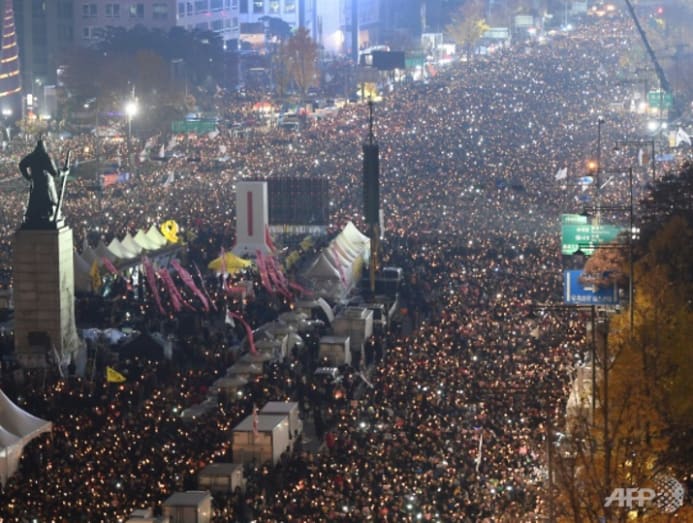
However, there were concerns that if the justices did not ratify impeachment – thereby allowing Park to remain – that the protest movement against her, which at times saw 2 per cent of the national population out on the streets in the wintertime cold, would not subside.
No one knew quite what might happen in the case of such a "half-impeachment".
Impeachments are, of course, extremely rare. This is only South korea's 2nd experience with it, and the street protest motility against Park was an extraordinary mobilisation over months in the cold, involving huge numbers of people.
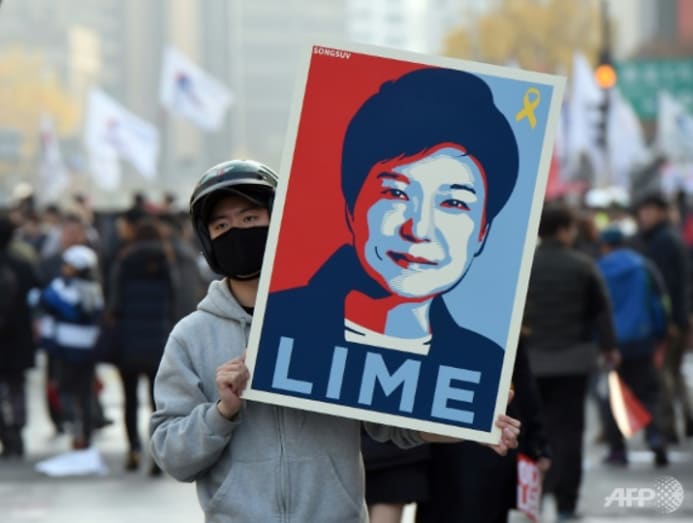
By the fourth dimension of her removal, Park's approval rating was in the unmarried digits. She was nationally loathed for her repeated scandals.
Farthermost RESPONSE TO 'THREAT'
In the months between the legislative and judicial impeachment votes, the land's politics were frozen. It is but unclear what might accept happened if Park had squeaked through the loftier court.
Would the protestors stay on the streets? Would the country'southward government district be paralysed until her term expired? Would frustrated protestors resort to extra-parliamentary action? The concern was that the constabulary might non be able to restore order. Hence the word of martial constabulary.
It is not immediately obvious that this should be read as a deadening-motion coup, war machine authorities, and then on. Near countries have emergency provisions for the utilise of the military machine domestically in farthermost cases, such as state of war or natural disaster.
It is also true that the anti-Park street movement might not take dissipated given how intense information technology was; that some on the left might not have accepted the legitimacy of a half-impeached president, creating the potential for semi-paralysis for months; that North korea might have seen this as a moment to muck around; and then on.
We are still waiting to see just how threatening the DSC response really was.
That said, it looks pretty bad. The protestation motility was incomparably non-trigger-happy – protestors even picked upwards their rubbish subsequently marches. No one died or was seriously injured. And protest, of course, is a guaranteed right in Republic of korea.
The notion that martial law would be necessary against the marchers seems pretty extreme.
South Korea also has a history of military regime. The war machine was only finally pushed out of politics in 1987. And the security agencies have a history of intervention in politics, always from the right against the left.
Only recently, the South Korea version of the CIA, the National Intelligence Service (NIS), got caught intervening on social media to assist the ballot of Park dorsum in 2012.
DEPOLITICISING SECURITY
And so the South Korean left is rightfully very suspicious of anything that smacks of military machine or intelligence officials intervening. This is wrong, not only for partisan reasons, of course, but also because it is fundamentally undemocratic.
Therein is the silver lining of this latest scandal. Moon's effort to depoliticise the security hierarchy – he has moved against NIS besides – deepens and reinforces civilian dominance over the national security state.
Moon seems quite determined to kill off cronyism and restore conviction in the government apparatus. He campaigned and has governed every bit an open up, accessible an optimistic persona.
Regardless of his politics, this democratic spirit in the executive is healthy for a young republic such as Due south Korea. Cleaning up the DSC and NIS is a part of that.
READ: What got Moon Jae In elected as Republic of korea'south new president? A commentary.
Robert E Kelly is a professor of international relations in the Department of Political Science and Affairs at Pusan National Academy. A version of this commentary first appeared in the Lowy Found'south web log The Interpreter. Read information technology here.
partridgepostioned.blogspot.com
Source: https://cnalifestyle.channelnewsasia.com/commentary/commentary-what-would-seoul-look-if-park-geun-hye-wasnt-impeached-284421
0 Response to "Commentary: What would Seoul look like if Park Geun-hye wasn't impeached?"
Post a Comment